
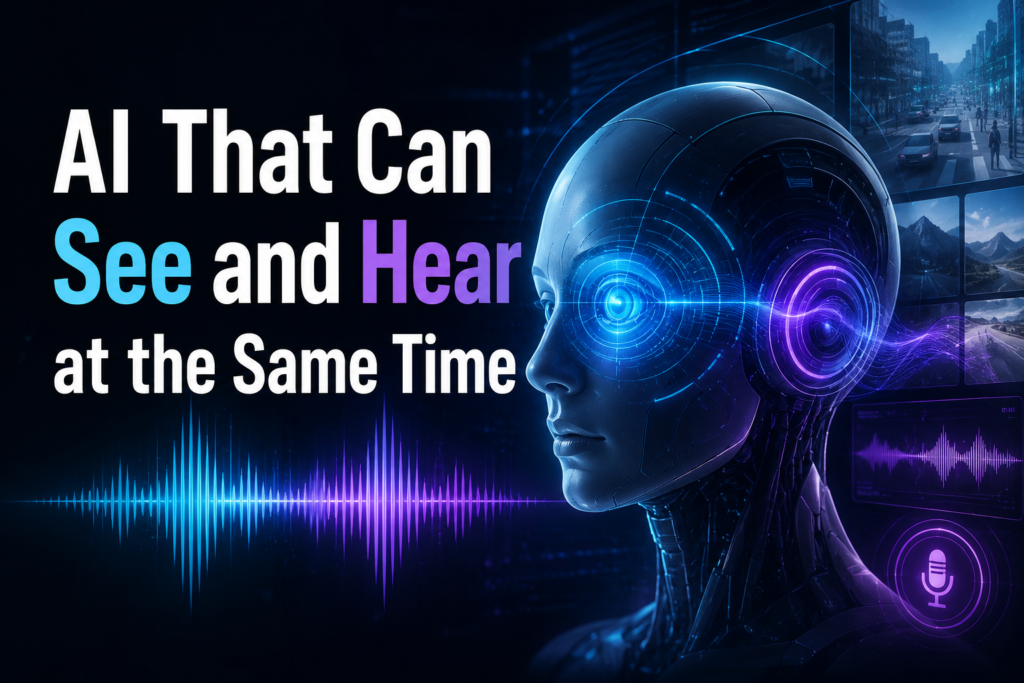

For a long time, AI worked the old way, and it was slow. You’d type something in, it would process your text, then send a reply back, one step at a time, one sense at a time. But now, with the rise of multimodal AI, that’s finally changing. Newer models, things like GPT-4o style systems and Gemini Live, can take in video, audio, and text all at once and respond as if a single mind is processing everything together, just like a human does.
We don’t think about switching between seeing and hearing; we just do both naturally, at the same time, without delay. That’s exactly what this new generation of AI is starting to do, too. It’s not just answering what you type anymore; it’s watching, listening, and understanding all in one moment. And that shift is what makes this technology feel so different from everything that came before it.
How It Actually Works
When you ask a question to AI, it doesn’t look things up the way a search engine would. Instead, it takes your question and breaks it into small pieces of information, almost like puzzle pieces, called tokens. Then it predicts what the most natural, sensible next piece should be, over and over, one piece at a time, until a full answer forms. All of this happens based on patterns learned during training.
Now add seeing and hearing into that picture. In older systems, if you sent a photo, a completely separate model would first turn that image into a text description in the background, and only then hand that description over to the text model to actually respond. Two systems passing notes to each other, and that constant passing back and forth is exactly what caused the delay.
In newer multimodal AI, there’s no hand-off like that anymore. Seeing and hearing are combined at the same time, instead of translating one into the other first. So if you’re talking while pointing your camera at something, the AI isn’t hearing and seeing in two separate steps, it’s processing both at once. That’s exactly why it feels so natural, almost like talking to a real person instead of waiting on a machine.
Core Features
When I first searched into the core features of this, I was honestly shocked, in a good way. I didn’t expect this to actually be possible so soon. AI now feels completely different from what it used to be. It doesn’t wait for you to finish talking, or for a photo to fully upload before it responds. It reacts as things happen, live, the same way a person naturally reacts while you’re still mid-conversation with them.
It can also connect what it sees with what it hears, at the same time. For example, if you hold up a broken phone charger and ask “can this be fixed,” it understands “this” by actually looking at the object itself, instead of just guessing from your words alone. And since there’s no lag from switching between separate models anymore, it can hold a flowing conversation while looking at something, almost like a person standing next to you, rather than typing into a chatbot and waiting.
Some of these models can even pick up on how you’re saying something, not just the words themselves, noticing hesitation, excitement, or urgency in your voice. But the feature most regular users will actually notice is the live camera and voice combo. You just point your camera at something and talk to it naturally, like Gemini Live or GPT-4o’s voice mode, no separate steps needed anymore.
Real-World Use Cases
Imagine traveling to a country where you don’t know the language. You point your camera at a menu or a sign board, and the AI can see the text and hear you ask “what does this say,” then instantly translate it out loud, all in one smooth moment, instead of typing it into a separate translator app.
It can also be genuinely helpful for students. If someone’s trying to solve a math problem and explaining their reasoning out loud while working it out on paper, the AI watches the paper and listens to their voice at the same time, catching the mistake right when it happens, not after the whole problem is already done.
This next one might be the most meaningful of all. Someone who’s blind or can’t see well can point their camera around a room and simply ask “what’s in front of me” or “is the stove on,” and get a spoken answer in real time, almost like having a sighted person right there describing things as they happen.
And while driving, someone could ask “what does that sign say” without ever taking their eyes off the road, and the AI sees the sign and answers out loud immediately.
Conclusion
If there’s one thing to take away from all of this, it’s that AI has moved from waiting for you to finish to actually experiencing things alongside you, live. I didn’t fully get what that meant until I tried it myself, it’s a strange feeling the first time.
But one thought keeps coming back to my mind. If students start relying on it like a teacher, companies start relying on it like an employee, and travelers start relying on it like a personal guide, will people eventually stop feeling like they need another human in their life at all?